
Gasping after a single flight of stairs? Light-headed when you stand up? Many people blame age or low stamina, but the real cause may be a quietly failing aortic valve.
Aortic valve replacement is a surgical or catheter-based procedure that treats a diseased aortic valve and restores smooth blood flow from the heart to the body.
In this guide, we cover why it is needed, which valves surgeons use, how it is done, and what recovery looks like by an experienced heart surgeon in Lahore: Dr Ghulam Sarwar
Why Aortic Valve Replacement Is Needed
Think of the aortic valve as a one-way door at the exit of your heart. With each beat, it opens to push oxygen-rich blood out to the body, then closes to keep it from flowing back. When that door stiffens or will not close properly, the heart has to push harder to deliver the same amount of blood, and the muscle slowly wears down.
Replacing the valve gets blood moving freely again. Patients typically notice relief from breathlessness, chest pain, dizziness, and constant tiredness, and the heart is spared the long-term strain that can lead to heart failure.
Already noticing these signs? Do not wait for them to get worse. A simple echocardiogram shows how your valve is working, so book a check-up with a heart specialist while you still have options.
Which Aortic Valve Problems Call for Repair or Replacement?
Aortic valve surgery treats aortic valve disease, and three conditions account for most cases.
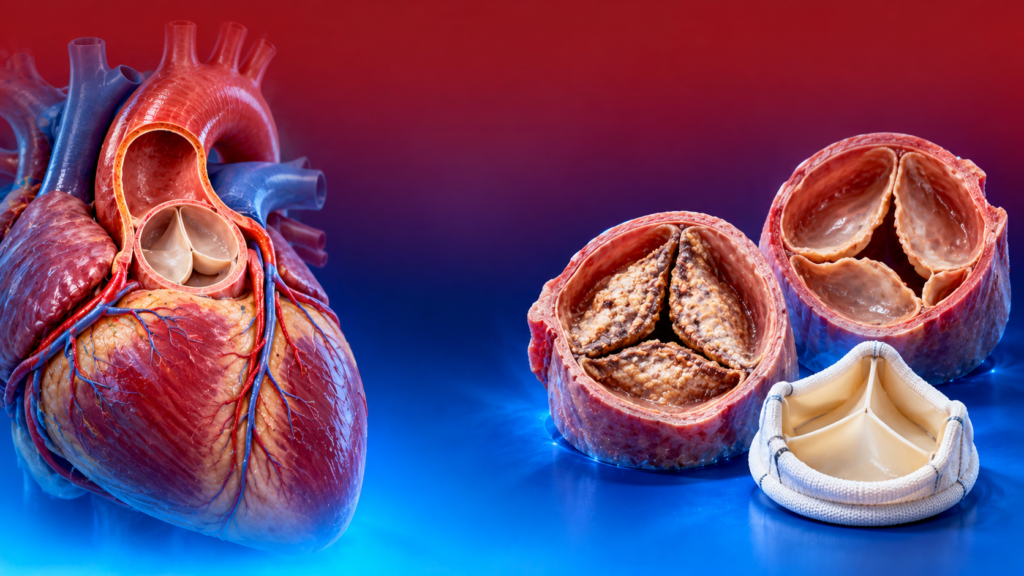
- Aortic valve stenosis: The valve narrows and stiffens, often from calcium build-up as we age, so the heart struggles to push blood through a smaller opening.
- Aortic valve regurgitation: The valve doesn’t seal fully, so some blood flows back into the heart’s main pumping chamber after each beat, forcing it to handle extra volume.
- A congenital aortic valve condition: Some people are born with a valve that never formed normally, which is a type of congenital heart defect. A bicuspid valve, with two flaps instead of three, is a well-known example and may wear out earlier in life.
Repair or Replace: Your Treatment Options
Surgeons offer two types of aortic valve surgery. In aortic valve repair, surgeons reshape or reinforce your own valve, which suits some leaking valves and keeps natural tissue in place. In aortic valve replacement, surgeons remove the damaged valve and replace it with a new one, which is the usual route for stenosis and for valves too damaged to repair.
The right choice depends on your valve’s condition, your age, your symptoms, and your overall health. Not sure which applies to you? Bring your echo report to a consultation and ask your surgeon to walk you through both.
What Kind of Valves Are Used in Aortic Valve Replacement Surgery?
Your surgeon can choose from three options.
| Valve | What it is | Worth knowing |
| Mechanical | Made from strong metal and carbon materials | Built to last for decades, but you will need blood thinners for life. |
| Biological (tissue) | Taken from pig or cow heart tissue, sometimes from a donor | Often lasts 10 to 20 years and may spare you long-term blood thinners, but may need replacing later |
| Ross procedure | Your own pulmonary valve replaces the aortic valve, and a donor valve replaces the pulmonary valve. | A living valve with no lifelong blood thinners in most cases, but a complex operation done at specialised centres |
Age, lifestyle, willingness to take blood thinners and future pregnancy plans all shape the decision, so it is worth discussing them openly before surgery.

How the Procedure Is Done
There are two main routes:
- In open-heart surgery, the surgeon opens the chest, connects you to a heart-lung machine, removes the diseased valve, and stitches in the new one. In suitable patients, surgeons use smaller incisions in minimally invasive cardiac surgery.
- In transcatheter aortic valve replacement (TAVR), a folded valve travels on a thin tube, usually through an artery in the leg, and opens inside the old valve. No large chest incision is needed, and the heart keeps beating throughout.
Preparing for Aortic Heart Valve Surgery
Preparation starts with tests that show your surgeon exactly what is going on:
- an echocardiogram to assess the valve
- an ECG
- a chest X-ray
- blood tests
- and often a CT scan or coronary angiogram to map your heart and arteries.
Your heart team then reviews the results together and recommends open surgery or TAVR, along with the best valve for you. Your surgical team will explain everything else you must do before the day.
Benefits, Risks and Complications of Aortic Valve Surgery
The biggest benefit is simple: a heart that no longer has to fight a faulty valve. Most people breathe easier, get less tired, return to everyday life, and face a lower risk of heart failure.
Risks of aortic valve repair and replacement
It is still major heart surgery, so being informed matters. Possible complications include:
- bleeding
- infection
- blood clots or stroke
- irregular heart rhythms (sometimes needing a pacemaker)
- kidney problems
- reactions to anaesthesia
Valve-specific issues include infection of the new valve, wear in a tissue valve, clots on a mechanical valve and, after TAVR, a small leak around the valve. Death is rare.
Your own risk depends on your age, other health conditions, and how urgent the operation is. Ask your surgeon for a personal risk estimate before you decide.
How Long Does Recovery Take?
Recovery is usually quicker after TAVR than after open surgery. These durations are approximate and differ from person to person:
| Procedure | Hospital stay | Back to normal activity |
| Open-heart surgery | About 5 to 7 days | About 6 to 12 weeks |
| TAVR | About 1 to 3 days | About 1 to 2 weeks |
After open surgery, the breastbone needs roughly 6 to 8 weeks to heal, so heavy lifting has to wait. Regular follow-ups, echo checks, and, if advised, cardiac rehabilitation keep your recovery on track.
Take the Initial Step With a Heart Surgeon in Lahore
Aortic valve disease does not fix itself, and the sooner you get assessed, the more options you have. If you have breathlessness, chest pain, dizziness, or a valve problem already noted in your reports, an experienced heart surgeon in Lahore, Dr Ghulam Sarwar can review your tests, explain whether repair, open surgery, or TAVR suits you, and plan every step with you.
Book your consultation today for clear answers about your heart before minor symptoms become major problems.
Frequently Asked Questions
What is the success rate of aortic valve replacement surgery?
It is very high for most patients. Most patients do well and enjoy lasting symptom relief. Results depend on your age, heart strength, other illnesses, and valve type, so ask your surgeon what to expect in your case.
What is the aortic valve replacement risk of death?
For suitable patients, the chance of dying during or soon after surgery is low, generally a small single-digit percentage. It goes up with older age, emergency operations, a weak heart, or other serious illness. Leaving severe, symptomatic valve disease untreated is usually riskier over time.
Is aortic valve replacement dangerous?
Any heart operation carries risk, but this one is well established and performed routinely. For most people with severe valve disease, ignoring the valve is more dangerous than treating it.
How serious is heart valve replacement surgery?
It is a major operation, usually involving a hospital stay and weeks of recovery. TAVR is gentler, which is why doctors often consider it for older or higher-risk patients.
What is the quality of life after aortic valve replacement?
Most people feel less short of breath and more energetic and can return to walking, work, and hobbies. Mechanical valve patients need regular blood thinner checks, and follow-up visits matter for everyone.