
Over the years, heart surgery has advanced significantly, which offers patients safer and more effective treatment options. Today, two of the most common approaches are minimally invasive cardiac surgery and traditional open-heart surgery. While both aim to treat serious heart conditions, they differ in technique, recovery, and suitability.
Minimally invasive heart surgery involves smaller incisions and specialized instruments, often resulting in quicker recovery and less discomfort. In contrast, traditional open-heart surgery requires a larger chest incision but remains essential for more complex heart conditions.
Understanding the differences between these two approaches can help patients and families make informed decisions about the most appropriate treatment.
What Is Minimally Invasive Cardiac Surgery?
Minimally invasive cardiac surgery (MICS) is a modern surgical approach that treats heart conditions through small incisions, typically made between the ribs, without fully opening the chest. Instead of the traditional sternotomy (cutting the breastbone), surgeons use specialized tools and sometimes robotic assistance to access the heart with greater precision.
What Is Traditional Open-Heart Surgery?
Traditional open-heart surgery is a well-established procedure where the surgeon makes a large incision through the chest (sternotomy) to access the heart directly. This method helps the surgeon have full visibility. It is often necessary for complex or multiple heart conditions.
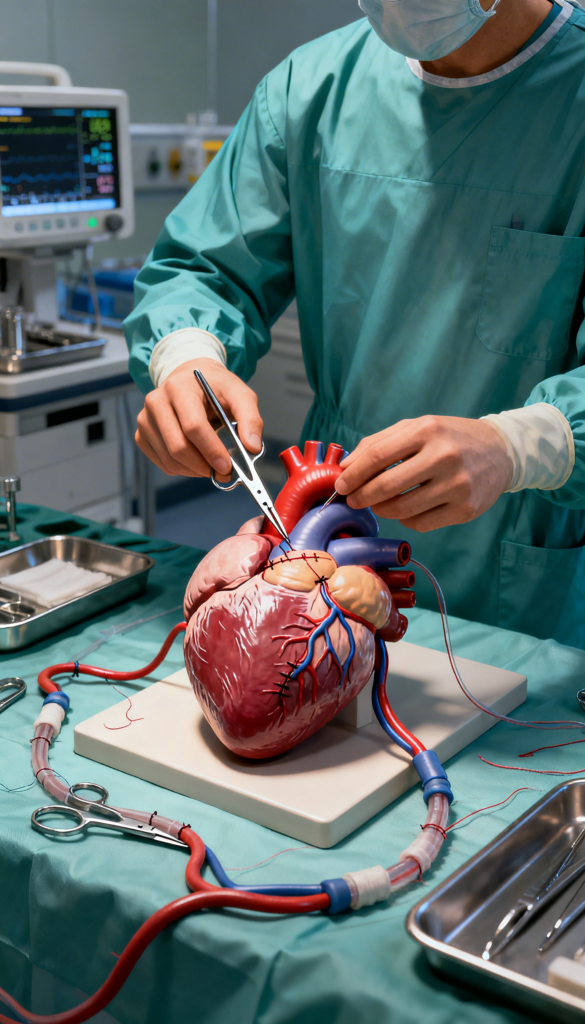
Key Differences Between Minimally Invasive and Open Heart Surgery
By understanding the difference between the two procedures, you can make an informed decision for your health. Explore which option is suitable for you.
| Factor | Minimally Invasive Cardiac Surgery | Open-Heart Surgery |
| Incision size | Small (2-4 weeks) | Large (sternum opened) |
| Recovery time | Faster (2-4 weeks) | Longer (6-12 weeks) |
| Hospital stay | Shorter | Longer |
| Pain & discomfort | less | More |
| Scarring | Minimal | More visible |
| Risk of infection | Lower | Higher |
| Surgical access | Limited | Full access |
| Suitability | Selected patients | Complex cases |
Benefits and Limitations of Minimally Invasive Cardiac Surgery
MICS surgery offers several advantages, especially for patients who meet the eligibility criteria. However, like any surgical procedure, it also has certain limitations.
Why patients prefer it
- Smaller incisions with minimal scarring
- Reduced post-operative pain
- Shorter hospital stay
- Faster recovery and return to daily activities
- Lower risk of infection
- Reduced blood loss during surgery
Potential Limitations
- Not suitable for all heart conditions
- Requires specialized surgical expertise and facilities
- Limited access may not be ideal for complex procedures
- A longer surgical time (in some cases)
- Possibility of conversion to open surgery if required
Benefits and Limitations of Traditional Open-Heart Surgery
In modern cardiac care, traditional open-heart surgery remains a vital and reliable option, especially for complex cases.
Key benefits
- Provides full and direct access to the heart
- Suitable for complex or multiple cardiac conditions
- Enables highly precise and comprehensive procedures
- Long-established method with proven outcomes
Potential Limitations
- Larger incision and more noticeable scarring
- Longer recovery period
- Increased post-operative discomfort
- Higher risk of infection compared to minimally invasive techniques
- Extended hospital stay
Recovery and Patient Considerations
The recovery after each procedure depends on the patient’s age and overall health. Minimally invasive surgery often allows a 2–4 week recovery, while open-heart surgery typically requires 6–12 weeks. At Omar Hospital, patients receive individualised post-operative care, monitoring, and rehabilitation to receive a smooth recovery regardless of the chosen approach.
Making the Right Choice for Your Heart Health
Whether you are considering minimally invasive cardiac surgery or traditional open-heart surgery, the best results come from expert evaluation and personalised care. Every heart condition is unique, and the right approach depends on individual circumstances.
Schedule a Consultation at Omar Hospital Lahore Today
Take the first step toward safe and effective heart surgery. Experienced cardiac specialists at Omar Hospital & Cardiac Centre guide patients through every step, from evaluation to recovery, providing the most suitable procedure for your condition.
FAQ
Who is a candidate for minimally invasive cardiac surgery?
Not every patient is suitable for minimally invasive cardiac surgery. Doctors assess factors like age, heart condition, medical history, and imaging results to determine if MICS is the right option.
What is the success rate of MICS?
The success rate of MICS is high and comparable to open-heart surgery when performed on suitable patients by experienced surgeons.
Can we do heart surgery without opening the chest?
Yes, many heart procedures can be done using minimally invasive techniques without fully opening the chest.